
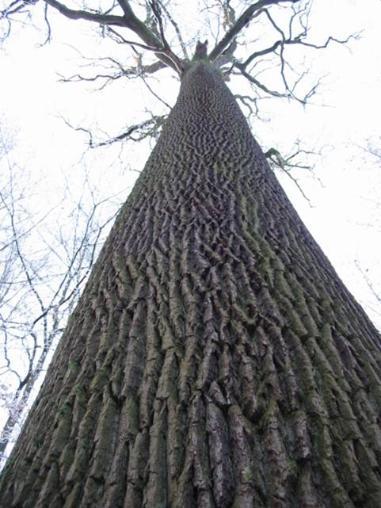
Two of the most important requirements for production of quality hardwood are the provision of shelter and the timely management of young plantations to produce sufficient stems for a final crop.
In the absence of shelter, high winds can lead to stem breakage, forking, a reduction in stem quality and reduced growth rates on broadleaved (hardwood) trees such as ash, sycamore, oak and beech.
Timely management of young broadleaf plantations will make the difference between a valuable crop and a plantation of firewood.
Shaping of broadleaves is an essential operation required for most broadleaved species. It involves the removal of defects such as forks and co-dominant shoots and assisting a single main shoot to achieve dominance. It is required a number of times for most species in order to achieve a long straight cylindrical stem. Late shaping will be much more costly and will not give the desired results.
Tending is the removal of a portion of the crop when the tree crowns have come into competition, and is dependent on the height growth and density of trees.